
2026-08-20 ·
Preventing Mold in Your Dishwasher After Miami Flooding
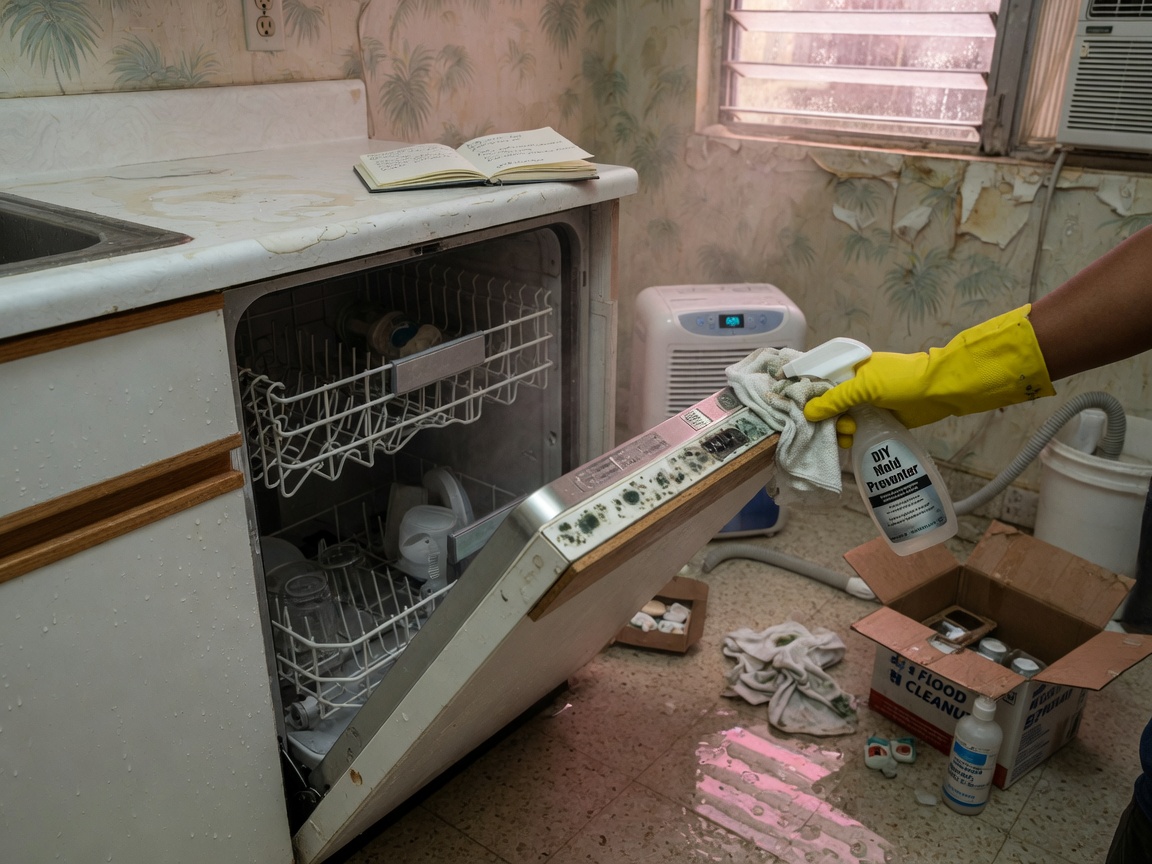
After Miami flooding, remove standing water and run a full cycle with white vinegar within the first 24 hours to halt mold spores from taking hold in the dishwasher sump and door seals. Miami-Dade County sees repeated storm surges that push water into ground-floor units and older multi-family buildings common in Downtown Miami, Brickell, and Little Havana, where aging plumbing and tight appliance spaces trap moisture longer than in newer Coral Gables homes. The county's hot wet summers keep relative humidity above 70 percent for weeks, so any residual dampness inside the tub or filter quickly turns into visible black or pink growth on gaskets and spray arms.
Clearing Floodwater Residue from the Unit
Begin by unplugging the dishwasher and bailing out any pooled water with a shop vac or towels before it reaches the heating element. In neighborhoods such as Wynwood and Overtown, where many 1960s–1980s homes sit on slabs near sea level, floodwater often carries silt that clogs the drain hose and leaves a film that feeds mold. Remove the lower rack and filter screen, then scrub both with a stiff brush and a solution of one part bleach to ten parts water, rinsing thoroughly so no chemical taste remains on dishes later. Pay special attention to the door boot and the sump area beneath the spray arm; these hidden spots stay damp longest in Miami's humid air and are the first places colonies appear after a storm. Once cleaned, leave the door propped open for at least four hours so interior surfaces can air-dry before any test cycle.
Drying Techniques That Work in Tropical Humidity
Run an empty cycle with two cups of white vinegar on the hottest setting to loosen any remaining biofilm, then follow with a second cycle using baking soda to neutralize odors. After both cycles finish, wipe the interior walls and door edges with a microfiber cloth and place a small fan or dehumidifier nearby for several hours; this extra step counters the constant moisture that drifts in from Biscayne Bay and settles in units near the Design District and Coconut Grove. In high-rise buildings common along Brickell, limited airflow around stacked appliances makes mechanical drying essential rather than relying on open windows alone. Check the drain hose connection under the sink for standing water that can back up into the tub during the next rain event, a frequent issue in Hialeah and North Miami homes built before modern backflow valves became standard.
Long-Term Habits to Reduce Recurrence
Scrape plates before loading and select the air-dry or heated-dry option on every cycle so residual moisture evaporates instead of pooling overnight. Once a month, run a cup of vinegar through an empty cycle on the hottest setting to keep the internal surfaces from harboring spores during the long wet season. Residents in Miami Beach and Coral Gables often notice faster mold return because salt air accelerates corrosion on metal racks, creating more crevices for growth. If the unit is more than eight years old and already shows pitting on the tub floor, replacement seals or a full dishwasher repair may be needed to restore a watertight fit after repeated flooding. Track local storm forecasts and elevate the unit on a 2-inch platform if your kitchen sits in a known flood zone such as Overtown or near the Freedom Tower.
Knowing When Professional Service Is Required
Persistent musty smells after two vinegar cycles or visible mold returning within a week signal deeper issues in the drain pump or door gasket that DIY cleaning cannot reach. Technicians familiar with Miami-Dade housing stock can inspect the installation height relative to the flood line and recommend stainless-steel braided supply lines that resist corrosion better than rubber in the county's salty, humid environment. For homes in areas like Miami Beach, where storm surge reaches higher, a service visit also confirms the unit's electrical connections stayed dry. See related guidance on managing appliance loads during peak humidity in Understanding Appliance Energy Use During Peak Miami Summers.